
Two backyard builds can look nearly identical from the footpath and still answer to completely different rules in Victoria. One test, whether the structure underneath can legally hit the road, decides the permit, the builder, and the insurance that follows it.
Type “build in my backyard Melbourne” into Google and the results blur into one long scroll. Modular showrooms. Tiny home builders. Site-built specialists. All promising roughly the same backyard dream, and none of them mention the one detail that actually decides which rules apply.
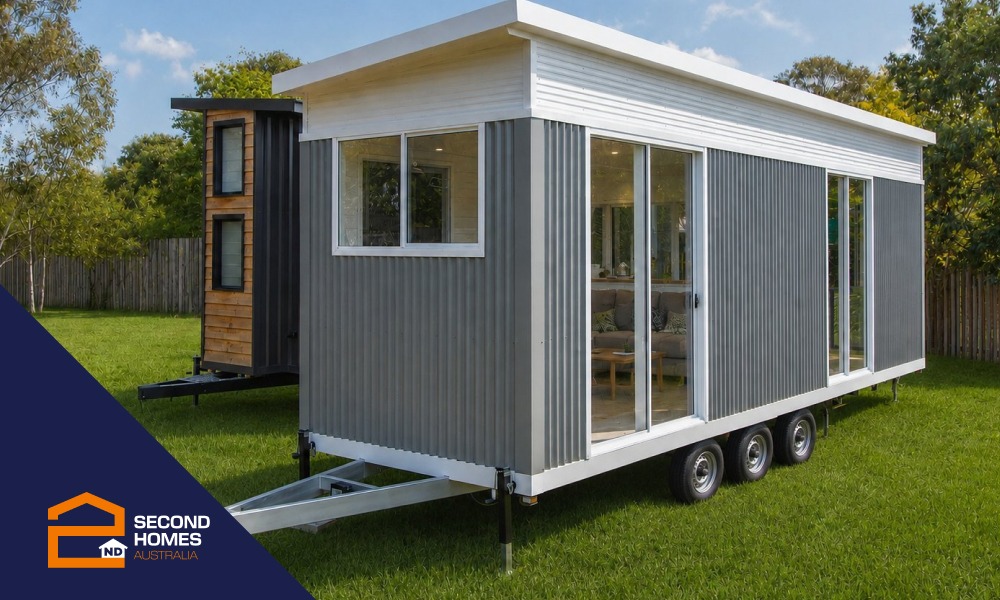
It isn’t the size of the build. It isn’t really the style either. It comes down to whether the finished structure can legally be registered and towed down a Victorian road. Get that wrong and a family can spend months designing a small second dwelling, only to discover partway through that the permit they assumed they needed, or didn’t, was based on the wrong assumption from day one.
The Wheels Decide More Than the Floor Plan
A trailer bolted underneath a build does not automatically make it a caravan. Victorian councils look at whether the whole structure, trailer included, can be independently registered and legally towed on the road. Fail that test and the same build gets reclassified as a building permit required, no matter how many wheels sit under it.
That single line is why two near-identical tiny homes Melbourne builders can give completely different advice on the same block. One is building something the law identifies as a vehicle. The other is building something the law sees as a house. The finish can be identical and yet the paperwork never is.
Modular and Site-Built Answer to the Same Permit
Once a structure fails the vehicle test, the delivery method doesn’t matter. Modular houses in Victoria and traditional site-built dwellings both sit under the same Class 1 building rules, the same permit process, the same registered builder requirement. Sidestepping that test is easy on a shed with wheels. Bolting a modular home to footings is a different story entirely.
Confusion crept into this space in July 2025, when the Victorian Building Authority, the old dispute resolution body, and the insurance arm of the state’s managed insurer were folded into one regulator, the Building and Plumbing Commission. Builders used to juggle three separate agencies depending on what had gone wrong. Homeowners now check one register and lodge one claim.
One Register Now Replaces Three Phone Calls
Any modular home builder in Victoria that a family is considering should be checked against that same register before a deposit changes hands, not after. Domestic building insurance becomes mandatory once a job passes $20,000, and it exists for exactly the situation nobody wants to picture, a builder who disappears, goes insolvent, or walks off site halfway through the job.
Checking takes about five minutes. Most people spend longer arguing over kitchen splashbacks.
The Real Choice Isn’t Modular Versus Site-Built
It’s permanent versus not. Wheels keep a build flexible, resold, relocated, towed to a different block entirely, but that flexibility comes at a cost. It depreciates more like the vehicle it legally is than the asset it looks like. Build to Class 1 standard instead, modular or site-built, and a small second dwelling adds to the property’s value and comes with a structural warranty a caravan will never carry.
Neither answer is wrong. They’re just answering two different questions, and most families searching for a backyard build haven’t worked out which one they’re actually asking yet.
Second Homes Skips the Fork in the Road
Second Homes Australia builds permanent, site-built second dwellings from the slab up, registered under the current framework and backed by a 10-year structural warranty, so there’s no wheels-versus-permit decision to second-guess halfway through. Twenty years of building the same way tends to settle that question before a client even has to weigh it up.
A tiny home on wheels can always be sold and driven away. A second dwelling built to last was never trying to be portable in the first place.