
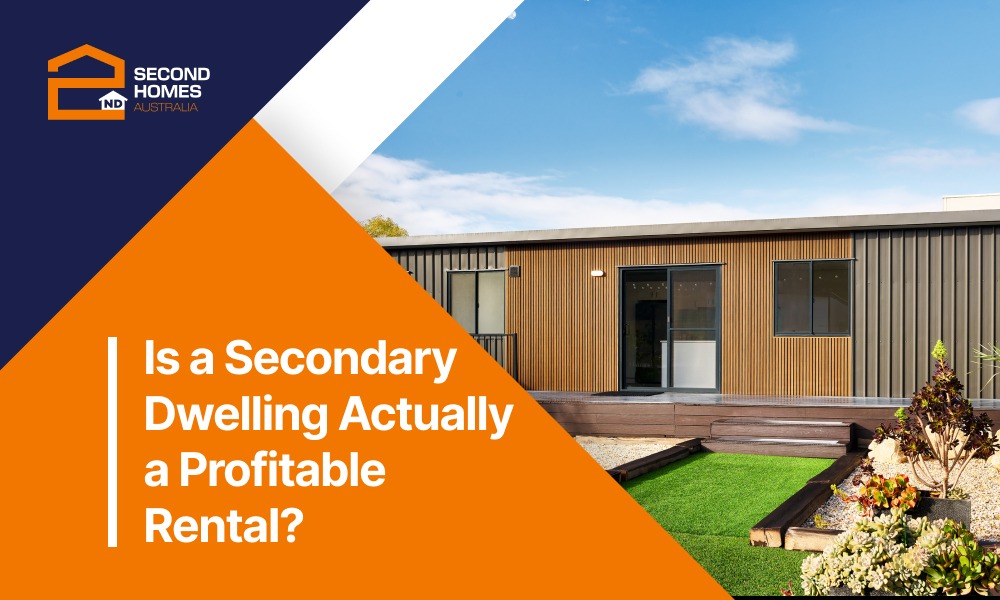
A closer look at whether Second Homes Australia investors are actually banking a profit once vacancy, insurance and compliance costs get subtracted from the headline yield, and what that verdict means for second homes in Melbourne specifically.
Seventeen per cent gross yield sounds like the kind of number a financial adviser would frame and hang on the wall. It is also, on its own, close to meaningless, because gross yield is the number before a single bill arrives. Vacancy, insurance, compliance and tax all take a bite before rent becomes profit, and the homeowner who only ever ran the gross figure is usually the one most surprised by what actually lands in the account twelve months later.
The Gross Number Gets All the Attention
A $150,000 build renting at $500 a week works out to roughly 17 per cent gross, and that figure alone is why so many homeowners get excited about a backyard dwelling. It is also only the starting line. Gross yield assumes full occupancy, zero costs and a tenant who never leaves, none of which describes how an actual rental year plays out.

Vacancy Is the First Bite Out of That Number
Melbourne’s rental vacancy rate has been sitting around 1.5 to 1.6 per cent through the first half of 2026, the tightest of any Australian capital, according to SQM Research. That sounds like good news for a landlord, and mostly it is, but a single-dwelling investment does not get the benefit of averaging across a portfolio. Turnover between tenants typically costs somewhere between one and four weeks of rent while the property is prepared, advertised and re-let, and at $500 a week that is $500 to $2,000 gone before insurance or compliance even enter the picture. That is the number worth asking about before comparing second homes in Melbourne on rent alone.
Insurance and Compliance Add Two More Line Items
Standard home and contents cover does not extend to a dwelling being rented out, which means dedicated landlord insurance is a genuine cost rather than an optional extra, typically running $800 to $1,500 a year for a secondary dwelling in Victoria. Water is the other line item that catches people out. A tenant can only be legally charged for water usage under the Residential Tenancies Act if the dwelling has its own meter, which means a secondhand or older structure without separate metering either absorbs that cost silently or needs the meter installed before the first lease is signed.
The Tax Side Cuts Both Ways
Land tax is the cost most homeowners worry about and, in most cases, the one that does not actually apply. A secondary dwelling sitting on the same title as a principal place of residence is generally still covered by that residence’s land tax exemption in Victoria, where the general threshold sits at $50,000 of land value in 2026. Rental income from the dwelling still needs to be declared to the ATO regardless. What rarely gets mentioned is the deduction sitting on the other side of the ledger. A newly built secondary dwelling qualifies for capital works depreciation at 2.5 per cent a year for 40 years, which on a $200,000 build works out to roughly $5,000 a year in deductions, a figure that materially changes the after-tax picture and one that a secondhand structure, already partway through its own depreciation life, cannot fully match.
Site-Built Versus Secondhand Changes the Profit Profile, Not Just the Price Tag
Anyone comparing second hand tiny homes Australia wide against a new site-built dwelling is really comparing two different profit profiles, not just two upfront numbers. A cheaper secondhand purchase can look like the more profitable option on day one, but transport costs, compliance upgrades, a shorter remaining depreciation schedule and, in some cases, a structure that never qualifies as a genuine self-contained dwelling in the first place, all work against it once the full cost picture gets run. A new build starts its depreciation clock at zero and its compliance file clean, which is worth more over a ten-year hold than the difference in purchase price usually suggests.
So What Does the Real Net Number Actually Look Like
Take the 17 per cent gross figure, subtract a realistic vacancy allowance, subtract insurance and compliance, and add back the depreciation benefit most homeowners forget to count, and the net outcome on a well-let second dwelling still typically lands in the low double digits. That comfortably beats what most standalone investment properties return once their own costs are counted, and it does so from a structure that also tends to lift the resale value of the property it sits on. The honest answer, for most properties, is that a second home in Australia can be a genuinely profitable rental once every cost is actually counted rather than just the ones that make the brochure.
A backyard does not send a bank statement. The dwelling built on top of it does, and the number that actually arrives is always the one left after vacancy, insurance and compliance have already been paid, not the one printed on the sales flyer.